Business Software — Built for the process you actually run.

Custom Software

Business-specific applications, portals and internal tools designed around real operations, with integrations and a documented path forward.
  • Fits your process
  • Replaces spreadsheets
  • Connects existing tools
  • You own the code
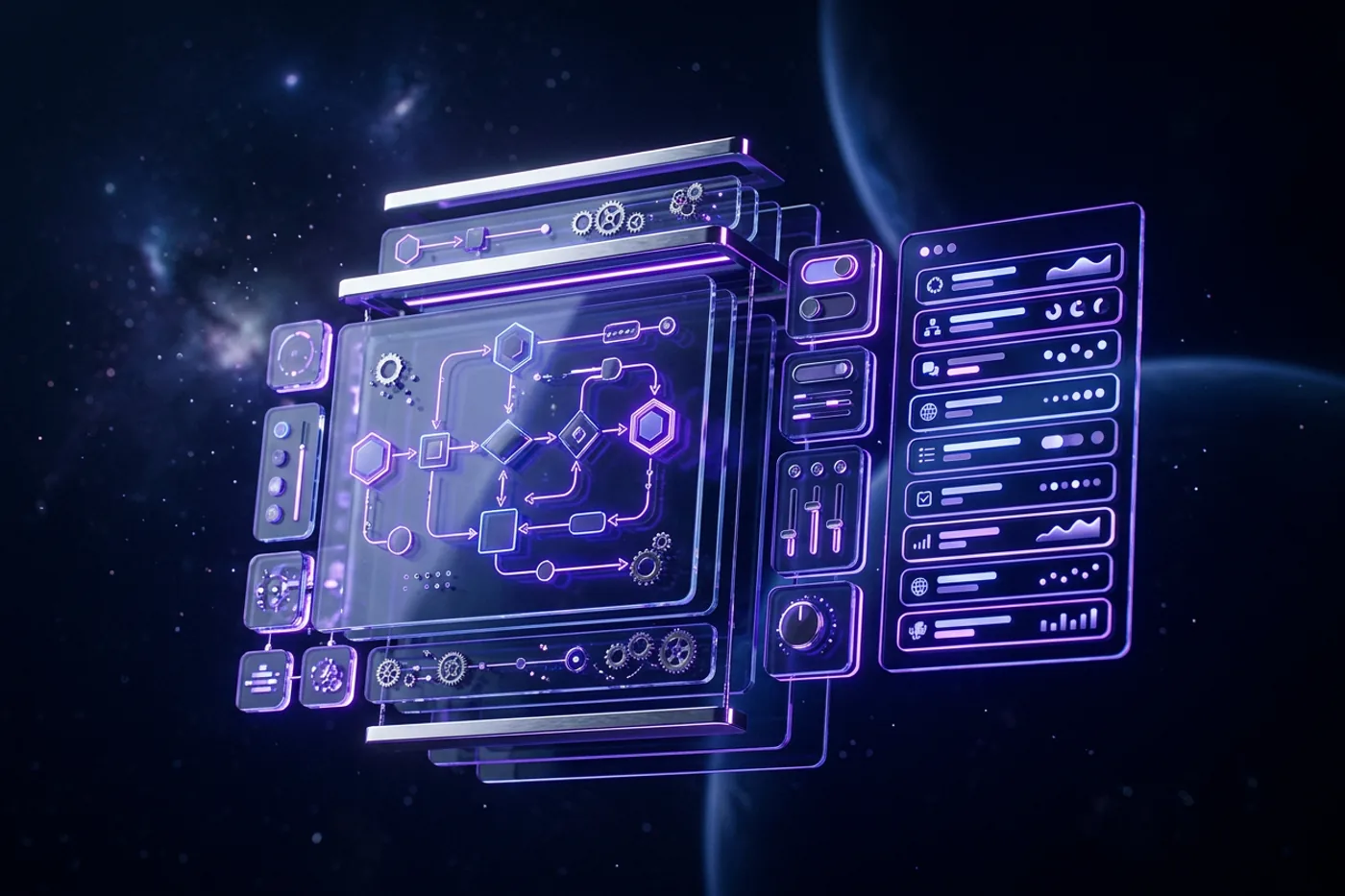
Illustrative concept visual — modular business software interface with workflow controls. No client work or data.Illustrative concept
Concept visual — no client workCustom Software
Best for
Operations leaders · SMEs · Enterprises
Typical starting point
Discovery conversation
Connects with
Internal databases and legacy systems · CRM, ERP and finance platforms · Cloud storage and document services
What's included

What this
actually covers.

Custom software makes sense when a business process is genuinely distinctive, when packaged tools force costly workarounds, or when the software itself creates an advantage.

Definition

  • Process and exception mapping
  • User roles and decision rights
  • Data model and source-of-truth design
  • Phased scope and success measures
  • Build-versus-buy assessment

Engineering

  • Custom web application development
  • Database and API architecture
  • Workflow, notification and approval logic
  • Reporting and data export
  • Secure authentication and permissions

Sustainable delivery

  • Staged releases and user acceptance testing
  • Data migration and reconciliation
  • Monitoring, backups and deployment process
  • Technical documentation
  • Support and enhancement planning
Deliverables

What you end up holding.

Everything is documented and handed over. Accounts, access and decisions stay with your business.

  • Process documentation and scope agreement
  • Solution architecture and data model
  • Working application delivered in phases
  • Integrations with agreed third-party systems
  • Migration and testing evidence
  • Documentation, training and support plan
Lobryx builds and implements ATS, HRMS and LMS as custom or configured solutions — we do not currently offer them as ready-made proprietary products. Where an established third-party platform is the better fit, we implement and integrate it rather than rebuild it for its own sake.
Where it goes wrong

What usually
gets in the way.

Off-the-shelf software encodes someone else's assumptions. When your process is different, the team compensates with spreadsheets and manual steps until the original investment is hard to justify.

Back to Business Software

Requirements written as screens

The real exception handling and decision points are discovered late, after architecture is already fixed.

Integration debt

Data is exported and re-imported between systems, with no reliable ownership of the truth.

No long-term owner

Custom builds without documentation and support become fragile dependencies on individuals.

Typical use cases

What this looks like in practice.

A distinctive operational process

A workflow that packaged tools cannot express without heavy workarounds.

A multi-system workbench

One interface across several operational tools, with shared data and clear permissions.

A client-facing service platform

A portal that digitises a service currently delivered through email and phone.

An internal automation layer

A focused application that removes repetitive coordination between teams.

Our approach

How we
deliver it.

We define, design and build business applications with disciplined scope: the workflow, the data model, the integrations and the people who will own it after handover.

  1. 01

    Discover

    We study the current process, the exceptions and the people involved, including where the real decisions happen.

  2. 02

    Design

    We agree the data model, roles, workflows and reporting before choosing how much to build versus configure.

  3. 03

    Build

    We develop in reviewable increments, migrate real data early and test the awkward cases with the people who handle them.

  4. 04

    Onboard

    Training, permissions and a supported rollout help the team move from parallel spreadsheets to the new system.

  5. 05

    Improve

    After adoption, we refine the workflow, add reporting and plan the next phase based on actual usage.

Integrations & dependencies

What this
connects to.

Nothing is assumed. During discovery we confirm which systems, accounts and providers are already in place, and who owns access.

Internal databases and legacy systemsCRM, ERP and finance platformsCloud storage and document servicesEmail, SMS and WhatsApp notificationsIdentity and access managementAnalytics and operational monitoring
FAQs

Questions
worth asking.

Everything here is agreed in writing before work starts. If something is still unclear, ask us directly.

How do you prevent an endless custom project?
By scoping a first release around a specific operational outcome, agreeing what is deferred, and reviewing against real usage before expanding. A custom build should earn each additional phase.
Will we be locked in to Lobryx?
No. You own the code and documentation for custom builds, subject to third-party licences. We use mainstream technology and avoid proprietary dependencies that would prevent another team from continuing.
Can you take over an existing codebase?
Often, after a technical review. We assess maintainability, security and documentation, then propose either incremental improvement or a staged replacement. We will not take on a codebase we cannot responsibly support.
How is success measured?
Against the operational outcome defined at the start: time returned to the team, reduced rework, faster approvals or improved data quality. We agree the measure before build so the result can be evaluated honestly.
Custom Software

Let’s work out the right scope.

Tell us what you need to achieve. We will reply with the options, a sensible first phase and an honest view of effort.

Or call +91 93191 83258